Physiotherapy and rehabilitation pathways at Terme di Roma
The physiotherapy department at Terme di Roma offers personalised pathways for functional recovery, motor rehabilitation and prevention, for orthopaedic, neurological, rheumatological, geriatric, cardio-respiratory and sports-related conditions.
What we do
- Post-traumatic, post-operative and neurological rehabilitation: programmes targeting joint, muscular and functional recovery.
- Prevention and integrated wellbeing: pathways designed to prevent injury, counter joint stiffness, improve posture and slow the loss of mobility that comes with age.
- An integrated thermal setting: alongside conventional physiotherapy — manual therapy and instrumental treatments — we offer hydrokinesitherapy in a fully equipped thermal pool, ideal for reducing joint load and easing the recovery of movement.
Treatments are delivered by highly qualified staff on the basis of an initial clinical assessment. This page gives an overview of the services, the fields of application and the related specialist consultations.
Eight ways to get moving again
Individual global postural training
Work on entire muscle chains to remove the causes of pain and misalignment, not merely the symptom. One-to-one sessions.
02Pre- and post-operative and neurological motor rehabilitation
Preparing the body for surgery and restoring independence afterwards; recovery of motor function impaired by nervous system injury.
03Thermal hydrokinesitherapy
Physiotherapy in water: in a thermal pool at about 32°C the load on the joints drops by up to 80-90% and movement becomes possible even with pain.
04Cardio-respiratory rehabilitation
Breathing exercises and graded aerobic training, to return to everyday activity with less fatigue.
05Tecar therapy — contact diathermy
Radiofrequency stimulates energy from within the tissues: pain-relieving, anti-inflammatory and regenerative at once.
06Instrumental therapies
TENS, infrared, iontophoresis, ultrasound, laser, electrostimulation: physical energies against pain, inflammation and loss of muscle tone.
07Therapeutic massage
Manual work tailored to the patient, to release muscle tension and improve blood and lymphatic circulation.
08Manual therapy, taping and functional bandaging
Joint mobilisation and manipulation to break the vicious circle of pain; tapes and bandages that support without immobilising.
The first physiotherapy assessment is free
So that we can assess your situation properly and point you towards the most suitable pathway, we offer a free initial physiotherapy assessment, by appointment.
An effective rehabilitation pathway always begins with a correct clinical picture: identifying the exact cause of the problem is essential to designing the right programme for you.
Book a consultation or ask for information
Telephone 0774 408500, option 4 · fisioterapia@termediroma.org
The physiotherapy centre operates inside the Terme di Roma spa complex — authorisation of the Municipality of Tivoli no. 45568/2016.
01 · Individual global postural training
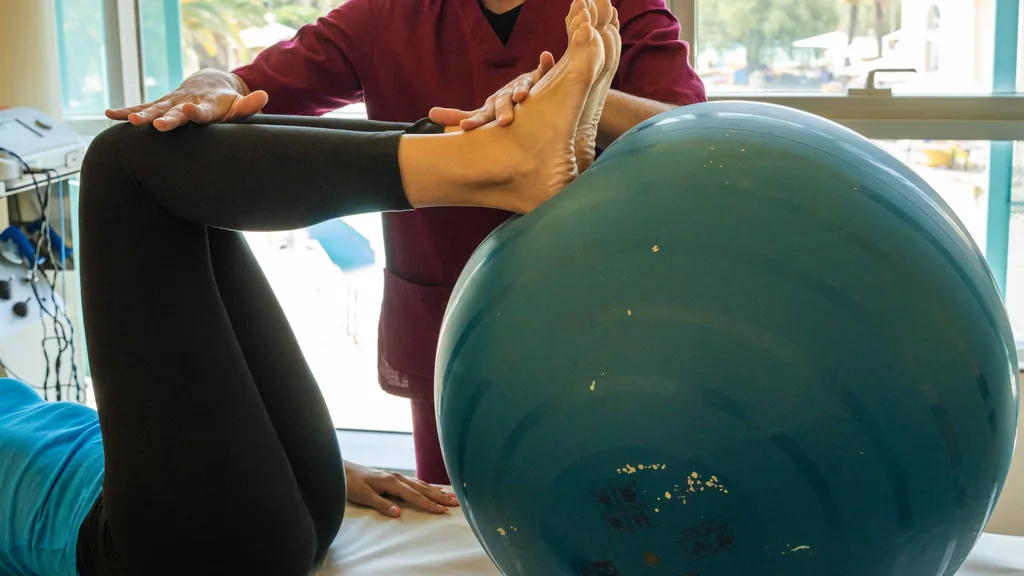
Individual global postural training is a bespoke therapeutic pathway led by a specialist physiotherapist. Rather than treating a single symptom, it works on entire muscle chains to identify and remove the real causes of pain and postural misalignment.
Through progressive stretching postures, breathing exercises and motor re-education techniques, patients learn to correct poor positions and recover the body's natural balance.
Main benefits
- Pain relief: effective against neck pain, lower back pain and sciatica.
- Correction and flexibility: improves posture, reduces stiffness and prevents recurrence.
- One-to-one sessions: continuous individual supervision for correct, safe execution.
Individual postural treatments using the Mézières method are also available, for static disorders of the musculoskeletal system.
02 · Pre- and post-operative and neurological motor rehabilitation
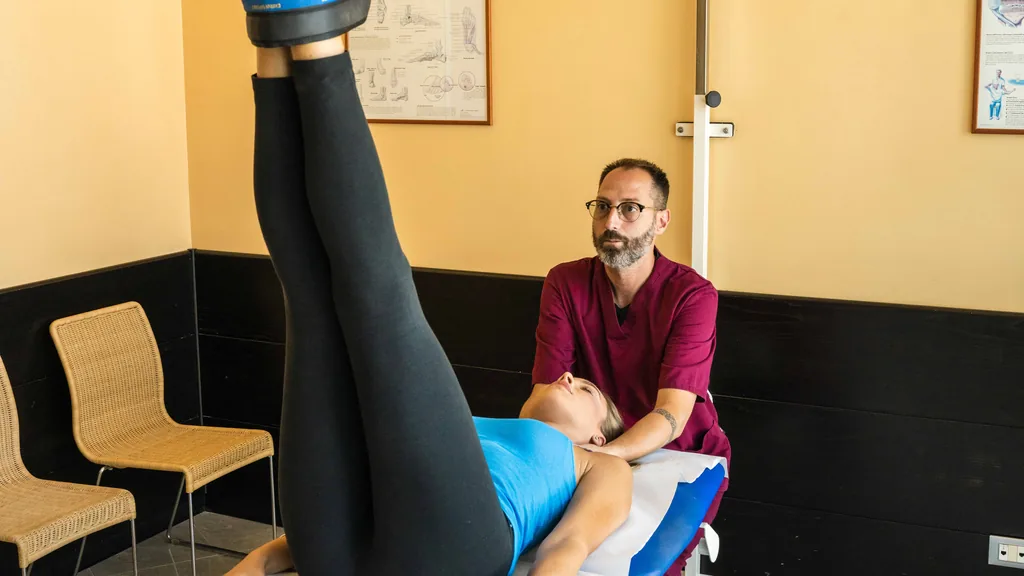
Pre- and post-operative motor rehabilitation is a personalised therapeutic pathway designed to prepare the body for surgery and to secure a rapid, safe functional recovery afterwards. Through targeted strengthening, mobilisation and movement re-education exercises, the physiotherapist accompanies the patient from optimising muscle tone before the operation through to the full restoration of independent movement.
Neurological rehabilitation is a specialist intervention aimed at recovering and compensating for motor and cognitive functions impaired by injury to the central or peripheral nervous system. Drawing on brain plasticity, the physiotherapist guides the patient through a tailored programme to stimulate residual abilities, reorganise motor signals and improve balance and coordination.
Main benefits
- Shorter recovery times: prepares the tissues before surgery to speed up healing.
- Restored mobility: recovers lost range of movement and muscle strength.
- Pain management: reduces post-surgical inflammation and swelling.
03 · Thermal hydrokinesitherapy: physiotherapy in water
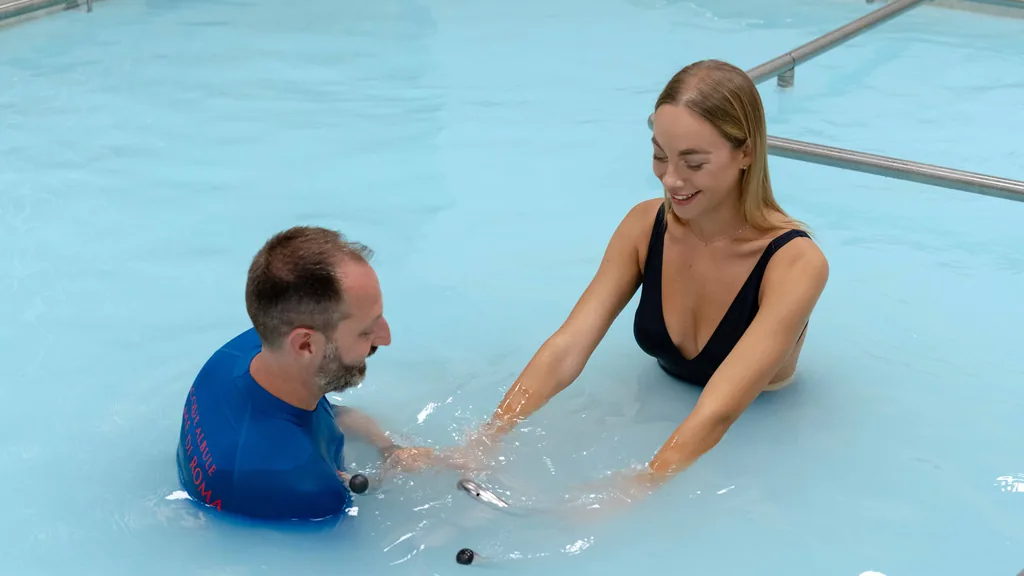
Hydrokinesitherapy is a branch of physiotherapy that uses water as a treatment and rehabilitation tool. Carried out in dedicated thermal pools under the guidance of qualified physiotherapists, it combines the principles of hydrokinesitherapy with the physical and chemical properties of thermal water.
Key features
- Microgravity and buoyancy: reduce pressure on the joints and the spine, making movement possible even with severe pain or restricted mobility.
- Thermal action (about 32°C): the warmth of the water promotes muscle relaxation, increases tissue vascularisation and produces an immediate analgesic, tension-releasing effect.
- Mineral enrichment: the trace elements in thermal water have a natural anti-inflammatory action and support tissue recovery.
Benefits for the patient
- Immediate reduction of pain and joint stiffness.
- Earlier resumption of movement in post-operative and post-traumatic pathways.
- Improved balance, posture and coordination.
- A safe, protected environment that reduces the fear of falling or of feeling pain during exercise.
- Shorter overall recovery times than land-based therapy alone.
Who it is for
It is particularly suited to orthopaedic rehabilitation (before and after surgery, tendinitis, muscle injuries, athlete management), spinal conditions (lower back pain, disc herniation), neurological problems, rheumatic conditions and motor prevention programmes.
The therapy pools have reduced depths and dedicated supports: you do not need to know how to swim. Every session is guided by a physiotherapist, in the water or from the poolside.
04 · Cardio-respiratory rehabilitation
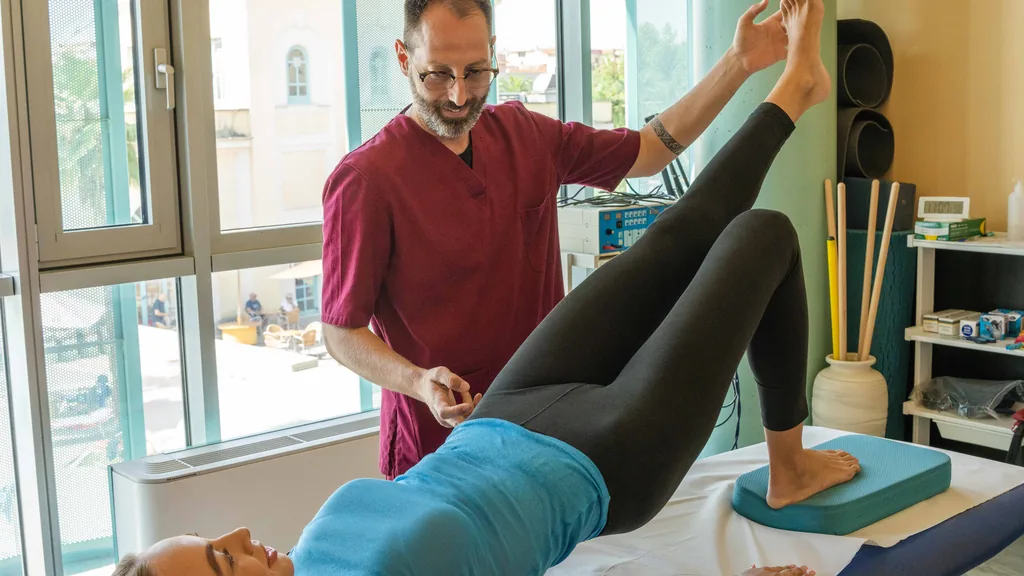
Cardio-respiratory rehabilitation is a multidisciplinary programme designed to improve breathing capacity, endurance and cardiovascular function. It combines breathing exercises with graded aerobic training, allowing patients to resume their daily activities safely and with less fatigue.
Main benefits
- Less breathlessness (dyspnoea): optimises breathing dynamics and oxygen use.
- Greater physical endurance: increases exercise tolerance and reduces fatigue.
- Better quality of life: prevents flare-ups and supports a safe return to physical activity.
05 · Tecar therapy — contact diathermy
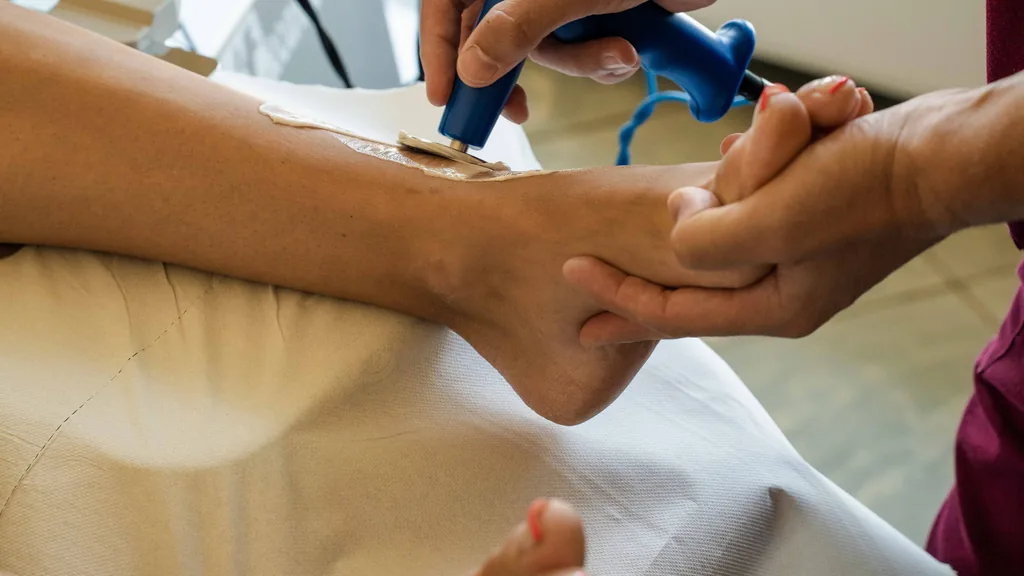
A combined action: pain-relieving, anti-inflammatory and regenerative.
Tecar therapy (capacitive and resistive energy transfer) is one of the most effective technologies in rehabilitation. Unlike other equipment that delivers energy from the outside, Tecar uses radiofrequency to stimulate the body's own energy directly inside the biological tissues.
Why it works so well
- Immediate activation of the microcirculation: increases the supply of oxygen and nutrients to damaged tissue.
- Deep lymphatic drainage: promotes the rapid reabsorption of effusions and inflammatory oedema.
- Faster cell repair: markedly shortens recovery times after injury or surgery.
It can be combined with therapeutic massage in the same session.
06 · Instrumental therapies
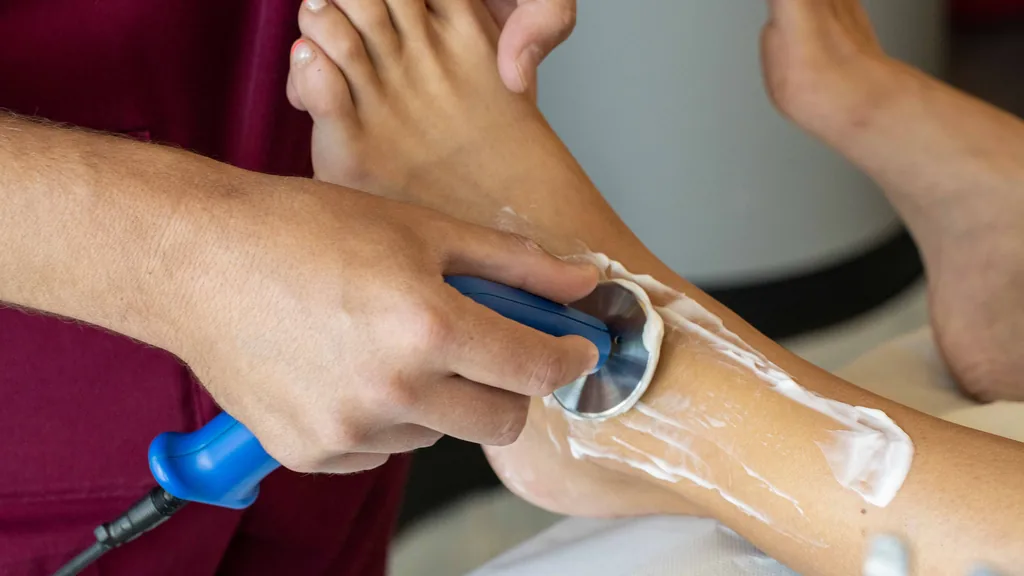
These use physical energies — electrical, thermal, light, acoustic or electromagnetic — produced by electromedical equipment to reduce pain, settle inflammation and speed up tissue recovery.
Analgesic therapies, against pain
Focused on interrupting pain signals and releasing muscle tension.
- TENS (transcutaneous electrical nerve stimulation): micro electrical currents applied to the skin. Ideal for acute and chronic pain such as sciatica, lower back pain and neck pain.
- Infrared: generates surface heat that nonetheless penetrates. Promotes vasodilation and muscle relaxation.
Anti-inflammatory therapies, against inflammation and oedema
Aimed at reducing swelling, reabsorbing blood effusions and settling joint and tendon structures.
- Iontophoresis: uses a direct current to carry an anti-inflammatory or analgesic drug straight into the area to be treated. It allows deep, targeted action without taking the drug orally.
- Ultrasound therapy: high-frequency acoustic waves create a cellular micro-massage effect. It has an anti-inflammatory action on tendons, reabsorbs oedema and haematomas and breaks down adhesions or calcifications.
- Laser therapy: a high-intensity light beam stimulates deep cellular regeneration. It accelerates natural healing and tissue repair in muscle injuries, sprains and tendinitis.
Stimulating therapies, for tissue and muscle
Designed to reactivate muscle function and speed up cell regeneration.
- Electrostimulation: controlled electrical impulses that produce passive muscle contraction.
Diadynamic currents and magnetotherapy are also available on site, used according to the clinical protocol.
07 · Therapeutic massage
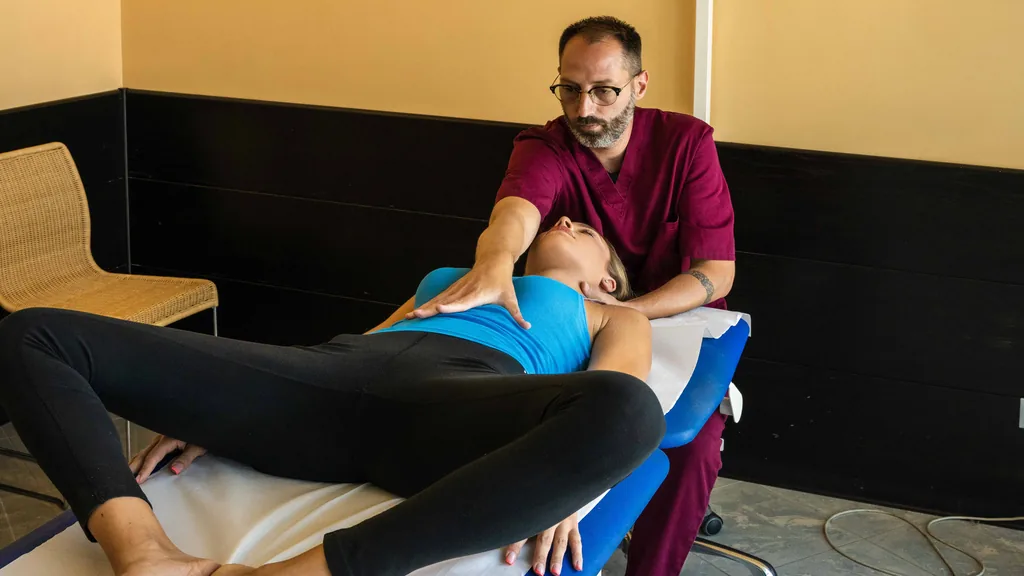
Therapeutic massage is a manual technique aimed at releasing muscle tension, reducing tightness and improving blood and lymphatic circulation in the treated tissue.
Through specific movements adjusted to the patient's needs, the physiotherapist works directly on stiff muscle bands to relieve localised pain and help eliminate metabolic waste.
08 · Manual therapy, taping and functional bandaging
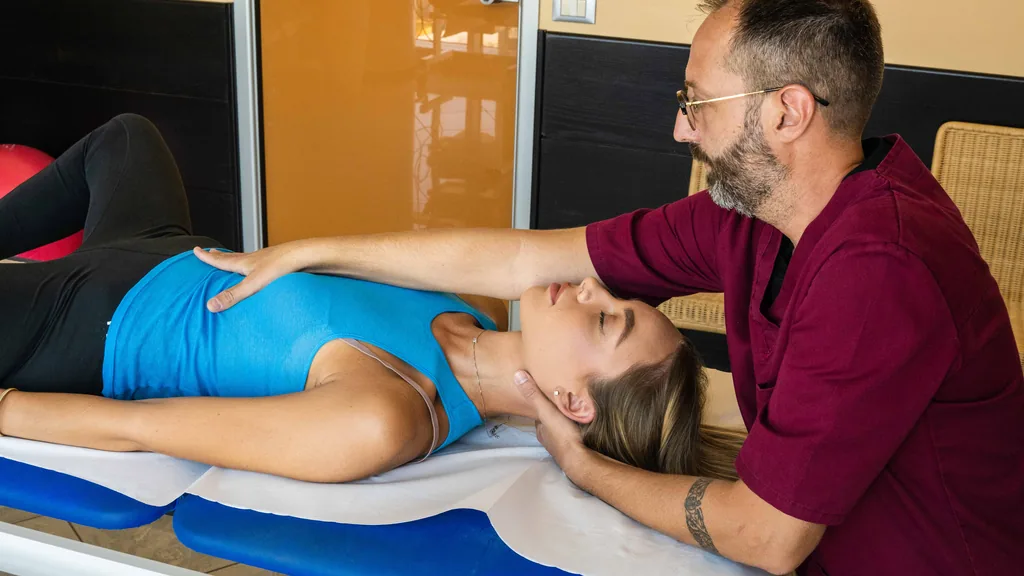
Manual therapy is a specialist physiotherapy approach that uses direct techniques — joint, tissue or visceral mobilisation and manipulation — to diagnose and treat neuro-musculoskeletal disorders. By working on the biomechanics of joints and soft tissue, the physiotherapist reduces movement restriction and breaks the vicious circle of pain.
Taping and functional bandaging
This involves the strategic application of elastic adhesive tape (kinesio taping) or non-elastic bandages to protect, support and guide joint and muscle structures.
Main benefits
- Support and stability: protects the injured joint or muscle without immobilising it.
- Drainage of oedema and haematoma: promotes fluid reabsorption through a decompressive effect on the skin.
- Lasting relief: its therapeutic action continues after the physiotherapy session.
Indicated for: joint sprains, muscle strains and tears, tendinitis, post-traumatic oedema and support in sport.
Other services in the department
N-FI method infiltration
The N-FI method (needle-free infiltration) combines dedicated technology with biochemical components — TriJALUX Gel: triple molecular weight hyaluronic acid, ozone and vitamin C — in selected cases, always on the doctor's indication and assessment.
Physiatric and orthopaedic consultations
The physiatric consultation sets the objectives and defines the treatment plan. The orthopaedic consultation assesses musculoskeletal problems — pain, restricted joint movement, trauma, post-operative outcomes, degenerative conditions — and directs the treatment.
Prices
| Service | Duration | Price |
|---|---|---|
| Physiatric consultation | — | € 90,00 |
| Orthopaedic consultation | — | € 90,00 |
| Postural training | 50 minutes | € 40,00 |
| Pre- and post-operative motor rehabilitation | 25 minutes | € 35,00 |
| Pre- and post-operative motor rehabilitation | 50 minutes | € 58,00 |
| Neurological rehabilitation | 25 minutes | € 35,00 |
| Hydrokinesitherapy | 30 minutes | € 40,00 |
| Group hydrokinesitherapy — monthly pass | two classes a week | € 170,00 |
| Group hydrokinesitherapy — added to SPA or thermal cures | — | € 15,00 |
| Cardio-respiratory rehabilitation | 25 minutes | € 40,00 |
| Tecar therapy | 25 minutes | € 35,00 |
| Tecar therapy with therapeutic massage | 50 minutes | € 58,00 |
| Therapeutic massage | 20 minutes | € 40,00 |
| Therapeutic massage | 40 minutes | € 65,00 |
| Laser therapy | — | € 13,00 |
| Ultrasound therapy | — | € 9,00 |
| TENS | — | € 9,00 |
| Iontophoresis | — | € 9,00 |
| Electrostimulation | — | € 9,00 |
| Infrared | — | € 9,00 |
| Taping | — | € 16,00 |
| N-FI method infiltration | three sessions: 5% discount | € 70,00 |
5% discount beyond six sessions on all therapies, excluding consultations and group hydrokinesitherapy. The first physiotherapy assessment is free, by appointment.
About physiotherapy at Terme di Roma
What are the advantages of hydrokinesitherapy over conventional physiotherapy?
Which conditions is hydrokinesitherapy most suited to?
Do I need to be able to swim?
What should I bring to a pool session?
Do I need a medical examination before starting?
What should I bring to the first physiotherapy assessment?
How many sessions will I need?
Does physiotherapy hurt?
Is instrumental therapy painful?
Can several therapies be combined in the same session?
How does Tecar therapy work?
How does laser therapy work?
Which instrumental therapies are most common, and what are they for?
Is the first assessment really free?
Can I have physiotherapy after surgery?
How to book
All services are provided by appointment. The first physiotherapy assessment is free.
Telephone 0774 408500, option 4 · fisioterapia@termediroma.org
The physiotherapy centre operates inside the Terme di Roma spa complex — authorisation of the Municipality of Tivoli no. 45568/2016.